
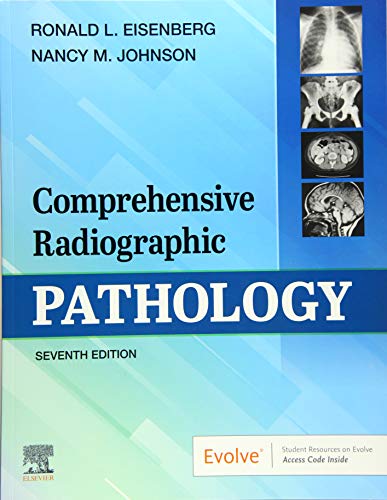
Comprehensive Radiographic Pathology / Ronald L. Eisenberg,
Material type: TextPublication details: St. Louis, Missouri Elsevier 2021Edition: 7th editionDescription: xii, 465p ill, some col ill 28cmISBN:
 - 978-0323566704
- RC78.E37 2021
| Item type | Current library | Call number | Status | Date due | Barcode | |
|---|---|---|---|---|---|---|
 Books
Books
|
KMTC:MWINGI CAMPUS General Stacks | RC78.E37 2021 (Browse shelf(Opens below)) | Available | MWG/1833 | ||
|
Books
|
KMTC:MWINGI CAMPUS General Stacks | RC78.E37 2021 (Browse shelf(Opens below)) | Available | MWG/1834 |
previously published as 6th edition in 2012
includes index
includes bibliographical references and index
Introduction to Pathology
Covers fundamental pathological processes: neoplasia, inflammation, hemorrhage, edema, ischemia, infarction, and more.
Specialized Imaging Techniques
Overview of imaging modalities: mammography, ultrasound, CT, MRI, nuclear medicine (SPECT, PET), and fusion imaging; their advantages and limitations.
studentebookhub.com
+1
Terminology used in each modality, plus summary tables.
studentebookhub.com
Respiratory System
Pathologic conditions in the lungs and airways.
Clinical manifestations, radiographic imaging features, and treatment options.
Skeletal System
Diseases affecting bone and joints.
Radiographic appearance of fractures, bone tumors, degenerative changes, etc.
Gastrointestinal System
Pathologies of the GI tract (esophagus, stomach, intestines, etc.).
How these appear on radiographs and in other imaging modalities, and their management.
Urinary System
Diseases of the kidneys, ureters, bladder, and associated structures.
Imaging signs (e.g., stones, infections, tumors) and therapeutic approaches.
Cardiovascular System
Heart and vascular disease pathology.
Radiographic signs of hypertension, atherosclerosis, congenital heart disease, etc.
Nervous System
Central and peripheral nervous system pathologies.
How tumors, hemorrhage, degeneration, and other diseases present on imaging.
Hematopoietic System
Blood and lymphatic system diseases (e.g., leukemia, lymphoma).
Radiographic features, lab correlations, and treatment.
Endocrine System
Diseases of endocrine glands (thyroid, adrenal, pituitary, etc.).
Imaging manifestations and therapeutic considerations.
Reproductive System
Pathology of male and female reproductive organs.
Radiographic findings and treatment options for common reproductive diseases.
Miscellaneous Diseases
Other conditions that don’t fall neatly into the above systems (e.g., systemic diseases, pediatric pathologies).
Imaging appearance and management.
Appendices and Supporting Material (in 7th edition)
Prefixes, suffixes, and roots (terminology)
Google Books
+1
Laboratory values and their clinical significance
Google Books
Answers to review questions for each chapter
Google Books
Glossary of key term
This textbook delivers a system-by-system breakdown of major human pathologies with a laser focus on their radiographic signatures across contemporary imaging modalities. It equips learners and practitioners with a diagnostic playbook that links disease mechanisms to visual patterns on X-ray, CT, MRI, ultrasound, nuclear medicine, and hybrid platforms. The content operationalizes pathology fundamentals, aligns them with real-world imaging workflows, and clarifies how radiographic evidence drives clinical decision-making. Designed for radiography students and frontline imaging professionals, it functions as both a foundational reference and a strategic guide for interpreting abnormalities with accuracy, consistency, and clinical relevance.
There are no comments on this title.